Why Is Jaipur Called the Pink City?
Jaipur is known across the world as the Pink City.
13 min read
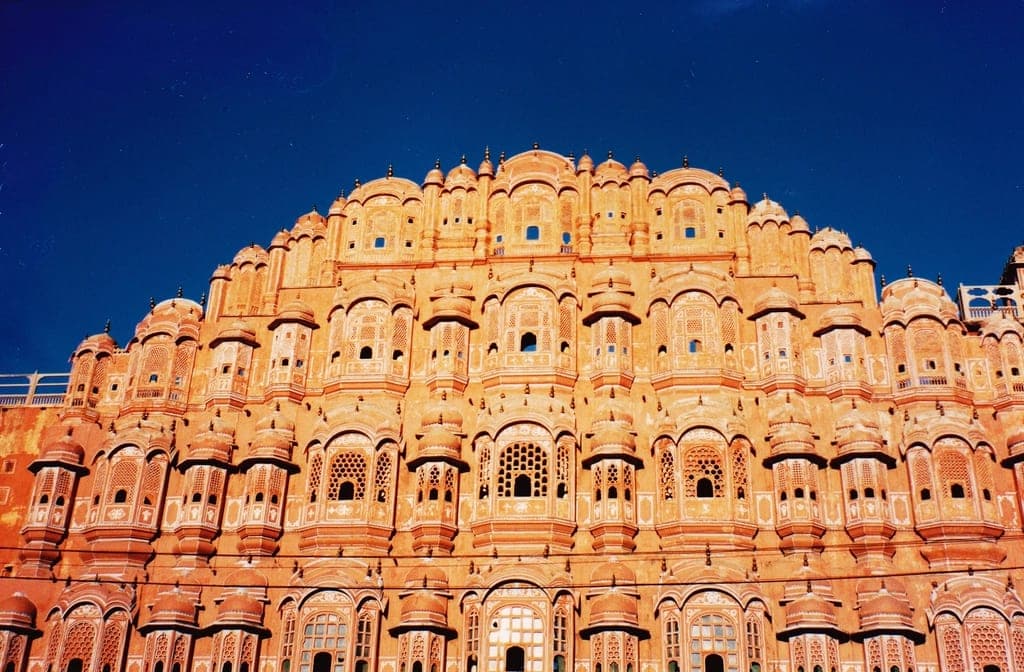
Jaipur is known across the world as the Pink City.
The nickname is so closely associated with Jaipur that many people assume the city was always pink.
It wasn't.
Jaipur was founded in 1727 by Maharaja Sawai Jai Singh II, but its famous pink identity came almost 150 years later.
The story begins in 1876, when Albert Edward, the Prince of Wales, visited Jaipur during his tour of India.
To welcome the royal guest, Maharaja Sawai Ram Singh II ordered large parts of the city to be painted in a distinctive pink shade.
Pink was considered a colour of hospitality and welcome.
The transformation was so memorable that Jaipur gradually became known as the Pink City, a name that has remained with it ever since.
But there is more to the story than one royal visit.
So let's look at why Jaipur was painted pink, what colour the city was before that, and why the Pink City still looks the way it does today.
The Short Answer: Why Is Jaipur Called the Pink City?
Jaipur is called the Pink City because Maharaja Sawai Ram Singh II had the city painted pink in 1876 to welcome Albert Edward, the Prince of Wales, who later became King Edward VII.
Pink was traditionally associated with hospitality.
The colour became so closely connected with Jaipur's identity that the historic city continued to maintain its distinctive pink-toned appearance.
That's the short version.
Now let's go a little deeper.
Jaipur Was Not Originally Pink
This surprises a lot of people.
Jaipur existed for almost 150 years before it became the Pink City.
The city was founded in 1727 by Sawai Jai Singh II after he shifted his capital from Amer.
Jaipur was carefully planned with:
- Broad roads
- Public squares called chaupars
- Markets
- Residential sectors
- Temples
- Royal buildings
- Fortified walls and gates
The city was already famous for its architecture, planning and commercial importance long before the pink colour appeared.
Historical heritage documentation indicates that the bazaars originally had a lighter lime-washed appearance, described in some records as lemon-coloured, before the 19th-century transformation.
So the Jaipur we now automatically imagine as pink looked noticeably different during much of its early history.
What Happened in 1876?
In 1876, Albert Edward, the Prince of Wales, travelled through India.
He was Queen Victoria's eldest son and would later become King Edward VII.
A royal visit of this scale was a major political and ceremonial event.
At that time, Jaipur was ruled by Maharaja Sawai Ram Singh II.
The Maharaja wanted to give the visiting prince an impressive welcome.
And what better way to prepare for a royal guest than repainting an entire city?
Apparently, Jaipur has never believed in doing things halfway.
Ram Singh II ordered buildings along the city's important streets and bazaars to be painted in a warm pink-toned colour.
The effect transformed the appearance of the city.
And Jaipur's most famous identity was born.
Why Did They Choose Pink?
The choice was symbolic.
Pink was associated with hospitality and welcome.
Since the entire exercise was intended to honour the visiting Prince of Wales, the colour worked as a grand visual gesture of hospitality.
According to Rajasthan Tourism, Maharaja Ram Singh had Jaipur painted pink because the colour represented hospitality during the prince's visit.
Think of it as the 19th-century equivalent of rolling out an enormous red carpet.
Except instead of a carpet, Jaipur painted streets full of buildings.
Was the Whole City Really Painted Pink?
When people hear the story, they sometimes imagine every building in modern Jaipur suddenly being covered in pink paint.
That's not quite the right picture.
The Jaipur of 1876 was much smaller than the Jaipur we know today.
The important transformation concerned the historic walled city, including prominent streets, commercial facades and bazaars.
Modern areas such as:
- C-Scheme
- Malviya Nagar
- Mansarovar
- Vaishali Nagar
- Jagatpura
- Pratap Nagar
didn't exist in their current form.
So when we talk about Jaipur being painted pink, we're primarily talking about the historic city that visitors today associate with areas around:
Hawa Mahal, Johari Bazaar, Badi Chaupar, Tripolia Bazaar and the surrounding walled city.
Is Jaipur Actually Pink?
This is another question visitors often ask after seeing Jaipur in person.
Because the colour isn't exactly the bright pink you might expect from the nickname.
Depending on the building, time of day and restoration, Jaipur's historic colour can look more like:
- Terracotta
- Salmon pink
- Dusty rose
- Reddish pink
- Pink-orange
- Red sandstone
Heritage documentation for Jaipur describes the 19th-century colour as a red-sandstone-like wash, which contributed to the city's Pink City identity.
So no, Jaipur isn't Barbie pink.
And we're probably all better for it.
The earthy colour works beautifully with Rajasthan's strong sunlight and historic architecture.
What Colour Was Jaipur Before It Became Pink?
According to heritage documentation associated with Jaipur's historic city, the earlier market facades used a lemon-coloured lime wash.
Under Sawai Ram Singh II, the appearance shifted towards the pink or red-sandstone-toned finish that became associated with Jaipur.
This means one of Jaipur's most famous traditions is actually a relatively late addition to its history.
The city was founded in 1727.
It became pink in 1876.
That's roughly a century and a half later.
Who Was Maharaja Sawai Ram Singh II?
Maharaja Sawai Ram Singh II ruled Jaipur during an important period of change in the 19th century.
His reign saw Jaipur interacting more closely with British India while also undergoing architectural and civic changes.
The repainting of Jaipur for the Prince of Wales's visit became the most famous story associated with his reign, but the period also saw noticeable changes in Jaipur's architectural character.
Heritage studies identify the 19th century under Ram Singh II as an important phase in which colonial architectural elements began appearing alongside Jaipur's existing Rajput traditions.
So the arrival of the pink colour was part of a wider period in which Jaipur itself was evolving.
The Prince of Wales Visit Changed More Than Jaipur's Colour
The 1876 visit left another visible mark on Jaipur.
The foundation stone of Albert Hall was laid during the Prince of Wales's visit.
Today, Albert Hall Museum stands in Ram Niwas Garden and remains one of Jaipur's most recognisable buildings.
Its Indo-Saracenic architecture is noticeably different from the earlier architecture of places such as City Palace or Hawa Mahal.
So 1876 became a particularly memorable year in Jaipur's architectural history.
It gave the city:
its famous pink identity
and contributed to the story of one of its best-known public buildings.
How Did the Name "Pink City" Stick?
The colour was originally connected with a specific royal visit.
But it quickly became a defining visual feature of Jaipur.
Over time, residents, visitors and travel writers began associating Jaipur with its distinctive pink facades.
The nickname was easy to remember.
More importantly, it accurately described something visually unusual about the city.
Eventually:
Jaipur = Pink City
became one of India's most recognisable city identities.
Much like:
- Jodhpur becoming known as the Blue City
- Udaipur being associated with the City of Lakes
- Jaisalmer becoming the Golden City
Jaipur's colour became part of how the city presented itself to the world.
Why Are Buildings in Jaipur Still Pink Today?
Once the colour became part of Jaipur's identity, maintaining the historic appearance became important.
The uniform pink-toned facades help give the old city its distinctive visual character.
Walk through Johari Bazaar or around Badi Chaupar and you'll notice how important that consistency is.
One pink building wouldn't create the same effect.
An entire street of matching facades does.
This uniformity is one of the reasons Jaipur feels visually different from many other historic Indian cities.
The colour isn't simply decorative.
It has become part of Jaipur's heritage character.
Jaipur's Pink Colour and the Walled City
The strongest Pink City experience is still found within Jaipur's historic walled city.
The original city was carefully planned in the 18th century and later acquired the pink colour that now defines it visually.
In 2019, Jaipur's walled city was inscribed on the UNESCO World Heritage List.
UNESCO recognises the historic city for its exceptional urban planning, architecture, grid layout, commercial traditions and living craft heritage.
The pink facades are therefore part of a much larger heritage environment.
What makes the area special isn't just the colour.
It is the combination of:
- Historic architecture
- Planned streets
- Chaupars
- Traditional markets
- Temples
- Old gateways
- Crafts
- Active commercial life
- Uniform streetscapes
The pink is simply the feature everyone notices first.
Hawa Mahal and the Pink City Identity
No building represents Jaipur's Pink City image more strongly than Hawa Mahal.
Built in 1799, Hawa Mahal predates the famous 1876 repainting.
Its elaborate facade and hundreds of jharokhas eventually became the visual symbol most closely associated with Jaipur.
Today, if you search for Jaipur anywhere in the world, there's a good chance the first photograph you'll see is Hawa Mahal.
Its pink-toned appearance now fits perfectly into the larger identity of the Pink City.
Interestingly, the building itself existed for decades before Jaipur acquired the nickname.
That makes Hawa Mahal both older than the Pink City identity and its most famous modern symbol.
Where Can You See the "Pink City" Properly?
If you want to understand why Jaipur deserves the nickname, don't judge it from Jaipur Airport or a modern neighbourhood.
Explore the walled city.
Start around:
Hawa Mahal
One of the most iconic pink facades in Jaipur.
Badi Chaupar
An important historic public square surrounded by old-city architecture and markets.
Johari Bazaar
A great place to see Jaipur's characteristic commercial facades while experiencing one of its most famous traditional markets.
Tripolia Bazaar
Another historic commercial street that shows the relationship between Jaipur's architecture and its trading culture.
Choti Chaupar
A second major historic square incorporated into Jaipur's original city plan.
City Palace Area
The royal and urban core of historic Jaipur.
Walking between these places gives you a much better sense of the Pink City than simply photographing Hawa Mahal and leaving.
Best Time to Photograph the Pink City
Jaipur's colour can look surprisingly different depending on the light.
Early Morning
The softer morning light works particularly well around Hawa Mahal.
It's also a good time to explore before traffic and crowds increase.
Golden Hour
Late afternoon light can make the old city's warm terracotta-pink facades appear richer.
After Rain
Monsoon skies can create dramatic contrast against Jaipur's warm-coloured buildings.
Night
Illuminated monuments such as Hawa Mahal and city gates provide a completely different version of Jaipur's architecture.
If you're serious about photography, visit the old city more than once.
The same building can look dramatically different at 8 AM and 6 PM.
Pink City vs Old Jaipur: Are They the Same Thing?
People often use the terms interchangeably, but there's a small distinction.
Jaipur refers to the entire modern city.
Old Jaipur generally refers to the historic centre.
Pink City is the popular nickname most strongly associated with the historic walled area and its characteristic facades.
Modern Jaipur stretches far beyond the original walls and includes neighbourhoods with completely different architectural styles.
So if someone tells you they're visiting the Pink City, technically they may mean Jaipur as a whole.
But the historic visual identity they're imagining is concentrated mainly inside the old city.
Was Jaipur Painted Pink for Queen Victoria?
This is a common misconception.
Jaipur was not painted pink because Queen Victoria herself visited the city.
The 1876 visitor was Albert Edward, the Prince of Wales, Queen Victoria's eldest son.
He later became King Edward VII.
This distinction matters because the story is sometimes simplified online into:
"Jaipur was painted pink for the Queen."
That's inaccurate.
It was painted to welcome the Prince of Wales during his India tour. Rajasthan Tourism records the event accordingly.
Was Jaipur Painted Pink for Prince Albert?
You'll sometimes see another confusing version of the story referring simply to "Prince Albert."
Albert Edward's full name included Albert, and he was the Prince of Wales during the 1876 visit.
He should not be confused with Prince Albert, Queen Victoria's husband, who had died years earlier.
The visitor was Albert Edward, Queen Victoria's son and the future King Edward VII.
Small historical detail.
Big difference.
Does the Pink Colour Have Any Connection With Rajasthan's Sandstone?
The colour of Jaipur's historic facades resembles the warm tones of sandstone commonly associated with Rajasthan.
However, Jaipur's Pink City nickname specifically developed from the painted appearance connected with the 1876 royal visit, rather than simply because every historic building was naturally constructed from pink stone.
This is why calling Jaipur a naturally pink sandstone city would oversimplify the story.
Paint, lime wash, architectural finishes and later preservation practices all contributed to the visual identity visitors see today.
Interesting Facts About Jaipur's Pink City Story
Jaipur Was Already 149 Years Old
Jaipur was founded in 1727 and painted pink in 1876.
So the Pink City identity appeared roughly 149 years after the city's foundation.
The Colour Was About Hospitality
Pink was chosen because it symbolised welcome and hospitality.
The Visitor Later Became King
Albert Edward later became King Edward VII in 1901.
Jaipur Was Previously Lighter in Colour
Heritage records describe earlier facades as having a lemon-coloured lime wash before the shift to a red-sandstone-like pink tone.
The Historic City Still Maintains the Visual Identity
The characteristic facades remain one of the defining elements of Jaipur's walled city.
Jaipur's Pink Is Really More Terracotta
Calling it "Pink City" sounds better, but the actual colour is closer to a warm terracotta or salmon-pink shade.
Frequently Asked Questions About Jaipur's Pink City Name
Why is Jaipur called the Pink City?
Jaipur is called the Pink City because Maharaja Sawai Ram Singh II had the historic city painted pink in 1876 to welcome Albert Edward, the Prince of Wales. Pink was associated with hospitality.
Who painted Jaipur pink?
The city was painted pink under the orders of Maharaja Sawai Ram Singh II.
When did Jaipur become the Pink City?
The famous transformation took place in 1876.
Who visited Jaipur in 1876?
Albert Edward, the Prince of Wales and future King Edward VII, visited Jaipur during his tour of India.
Was Jaipur always pink?
No. Jaipur was founded in 1727 and existed for almost 150 years before the 1876 repainting.
What was Jaipur's original colour?
Historical heritage records indicate that parts of the old city's commercial facades previously used a lighter, lemon-coloured lime wash before the pink-toned treatment became dominant.
Is all of Jaipur pink?
No. The strongest pink architectural identity belongs to the historic walled city. Modern Jaipur has expanded far beyond those original boundaries.
Is Hawa Mahal naturally pink?
Hawa Mahal is built using red and pink sandstone and today forms an important part of Jaipur's Pink City appearance. Its history, however, predates the city's famous 1876 repainting.
Is Jaipur officially known as the Pink City?
"Pink City" is a widely established nickname rather than Jaipur's formal administrative name. It is used internationally in tourism and cultural references to the city.
Final Thoughts
Jaipur's most famous nickname began with a surprisingly simple idea:
make the city look welcoming for an important guest.
In 1876, Sawai Ram Singh II transformed the appearance of Jaipur ahead of the Prince of Wales's visit.
What was intended as a grand gesture of hospitality became something much bigger.
The visitor left.
The colour stayed.
And over the next century and a half, that colour became inseparable from Jaipur's identity.
Today, millions of people know Jaipur as the Pink City before they know anything about its founder, its markets or its remarkable urban planning.
But the best way to understand the story is to walk through the old city yourself.
Stand at Badi Chaupar.
Walk through Johari Bazaar.
Look towards Hawa Mahal.
Notice how one building flows visually into the next.
Then remember that the streets themselves were already almost 150 years old before somebody decided:
Let's paint Jaipur pink.
It turned out to be a pretty good branding decision.