Best Places to Visit in Jaipur: Complete Guide
Jaipur is a city where history is not limited to museums or monuments. It is visible in the pink facades of the old city, the forts overlooking the Aravalli hills, centuries-old bazaars, royal…
Updated 15 min read
Jaipur is a city where history is not limited to museums or monuments. It is visible in the pink facades of the old city, the forts overlooking the Aravalli hills, centuries-old bazaars, royal palaces, temples, food streets and neighbourhoods that still carry traces of Rajasthan's heritage.
Known around the world as the Pink City, Jaipur is one of India's most popular travel destinations and forms an important part of the famous Golden Triangle tourist circuit alongside Delhi and Agra.
But Jaipur is much more than Hawa Mahal and Amer Fort.
Whether you are visiting Jaipur for the first time, planning a weekend trip, travelling with family, exploring Rajasthan's history or simply looking for interesting places around the city, there is a lot to discover.
This guide covers the best places to visit in Jaipur, from iconic forts and palaces to temples, museums, markets and some experiences that deserve a place in your Jaipur itinerary.
Quick List: Best Places to Visit in Jaipur
If you are short on time, these are some of the must-visit places in Jaipur:
- Amer Fort
- Hawa Mahal
- City Palace
- Jantar Mantar
- Jal Mahal
- Nahargarh Fort
- Jaigarh Fort
- Albert Hall Museum
- Galtaji Temple
- Birla Mandir
- Patrika Gate
- Panna Meena ka Kund
- Johari Bazaar
- Bapu Bazaar
- Jaipur Walled City
Let's explore them in detail.
1. Amer Fort
Located on the outskirts of Jaipur, Amer Fort, also commonly called Amber Fort, is one of the city's most impressive historical attractions.
The fort-palace complex rises above Maota Lake and combines grand courtyards, gateways, halls and royal residences. The architecture reflects the artistic influences that shaped Rajasthan's royal history.
One of its best-known sections is Sheesh Mahal, or the Mirror Palace, famous for its intricate mirror work.
Other areas worth exploring include Ganesh Pol, Diwan-e-Aam, courtyards and the palace complexes inside the fort.
Amer is not the sort of place you should rush through. Give yourself enough time to walk around, observe the architecture and enjoy the views from the fort.
Best for: History, architecture, photography and first-time visitors
Recommended time: Around 2 to 3 hours
Apna Jaipur Tip: Visit early in the morning when possible. The weather is usually more comfortable and you get more time to explore before the busiest part of the day.
2. Hawa Mahal
Few buildings represent Jaipur as instantly as Hawa Mahal.
Located in the heart of the old city, this distinctive pink facade with hundreds of small windows has become one of Jaipur's most photographed landmarks.
Hawa Mahal was built in 1799 during the reign of Sawai Pratap Singh. Its numerous jharokhas allowed royal women to observe processions and everyday activity on the streets while maintaining privacy.
While most people recognise Hawa Mahal from its street-facing facade, you can also enter the monument and explore its internal structure.
The upper sections provide interesting views over the old city and towards landmarks such as Jantar Mantar and City Palace.
Best for: Architecture, photography and Jaipur heritage
Recommended time: 45 minutes to 1 hour
Apna Jaipur Tip: For the classic Hawa Mahal photograph, the view from across the road is often better than standing directly underneath the building. Early morning also gives you softer light and comparatively less traffic.
3. City Palace Jaipur
Located inside Jaipur's historic centre, City Palace gives visitors a closer look at the city's royal heritage.
The complex includes courtyards, gateways, museums and palace buildings displaying royal costumes, weapons, paintings and historical artefacts.
One of the most photographed parts of City Palace is Pritam Niwas Chowk, particularly its beautifully decorated seasonal gates.
Unlike Jaipur's hill forts, City Palace sits right in the middle of the old city, making it easy to combine with Hawa Mahal and Jantar Mantar.
Best for: History, royal architecture, museums and photography
Recommended time: 1.5 to 2 hours
Nearby attractions: Jantar Mantar and Hawa Mahal
4. Jantar Mantar
Right next to City Palace is one of Jaipur's most fascinating attractions, Jantar Mantar.
At first glance, its enormous geometric structures may look like abstract sculptures. They are actually astronomical instruments.
Constructed in the early 18th century under Maharaja Sawai Jai Singh II, Jantar Mantar was designed for astronomical observations using the naked eye.
The observatory contains around 20 major fixed instruments and is considered the most significant and best-preserved collection of its kind in India.
It is also a UNESCO World Heritage Site.
The instruments were used to observe astronomical positions and perform calculations related to time and celestial bodies.
If you visit without understanding what the instruments do, the site can be difficult to appreciate. A knowledgeable guide or audio guide can make the experience considerably more interesting.
Best for: Science, astronomy, history and architecture
Recommended time: Around 1 hour
Apna Jaipur Tip: Don't just photograph the instruments. Learn how a few of them work. That's what turns Jantar Mantar from an unusual-looking monument into one of Jaipur's most fascinating attractions.
5. Jal Mahal
Sitting seemingly in the middle of Man Sagar Lake, Jal Mahal is one of Jaipur's most recognisable sights.
The palace is especially beautiful around sunrise and sunset, when the surrounding hills and changing sky reflect across the lake.
Visitors generally experience Jal Mahal from the lakeside promenade rather than exploring the palace interior.
That makes it a relatively quick stop and an easy addition while travelling between central Jaipur and Amer.
Best for: Photography, couples, families and scenic views
Recommended time: 20 to 40 minutes
Apna Jaipur Tip: Combine Jal Mahal with Amer Fort, Jaigarh Fort and Panna Meena ka Kund since they are all in the same general direction from central Jaipur.
6. Nahargarh Fort
If you want panoramic views of Jaipur, Nahargarh Fort should be high on your list.
Built along the Aravalli hills, Nahargarh overlooks the city and provides a completely different perspective from the monuments inside Jaipur's old city.
It is particularly popular in the evening, when the city stretches below and begins lighting up after sunset.
The fort itself has historical significance, but for many visitors, the combination of architecture, hilltop atmosphere and sweeping city views is the biggest attraction.
Best for: Sunset, photography, city views and groups of friends
Recommended time: 1.5 to 2 hours
Apna Jaipur Tip: Sunset is beautiful but also popular. Arrive well before sunset so you have enough time to explore the fort rather than reaching only for the final view.
7. Jaigarh Fort
Located above Amer Fort, Jaigarh Fort was built as a defensive stronghold and offers commanding views of the surrounding landscape.
Compared with Amer, Jaigarh feels more rugged and military in character.
One of its most famous attractions is Jaivana, a massive historic cannon.
The fort's walls, watchtowers and elevated location also provide excellent views towards Amer and the Aravalli hills.
If you're particularly interested in military history or forts, Jaigarh deserves to be included alongside Amer rather than skipped.
Best for: Military history, architecture and panoramic views
Recommended time: 1 to 1.5 hours
8. Albert Hall Museum
Standing prominently near Ram Niwas Garden, Albert Hall Museum is one of Jaipur's best-known museums.
Its Indo-Saracenic architecture makes the building itself worth seeing, even before you explore the collections inside.
The museum houses a wide range of objects including paintings, sculptures, decorative arts, textiles, metalwork and historical artefacts.
In the evening, the illuminated exterior gives the building a completely different appearance.
Best for: History, museums, architecture and families
Recommended time: 1 to 2 hours
Apna Jaipur Tip: Even if museums aren't normally your thing, consider stopping here in the evening to see the illuminated building.
9. Galtaji Temple
Often referred to by travellers as the Monkey Temple, Galtaji is an old pilgrimage site located among the hills outside Jaipur's main urban centre.
The complex includes temples, pavilions and sacred water tanks surrounded by rocky terrain.
Its setting makes Galtaji feel very different from Jaipur's forts and palaces.
The site is also known for the monkeys that live around the temple complex, although visitors should avoid feeding or disturbing wildlife.
Best for: Spirituality, architecture and offbeat exploration
Recommended time: 1 to 2 hours
Travel tip: Dress respectfully as this is an active religious site.
10. Birla Mandir
Birla Mandir, also known as Lakshmi Narayan Temple, is one of Jaipur's prominent modern temples.
Built largely from white marble, the temple stands near Moti Dungri and is dedicated to Lord Vishnu and Goddess Lakshmi.
Its appearance is especially striking in the evening when the temple is illuminated.
Compared with Jaipur's historic monuments, Birla Mandir offers a quieter spiritual stop and can easily be included in an evening itinerary.
Best for: Families, architecture and spiritual visits
Recommended time: 30 to 60 minutes
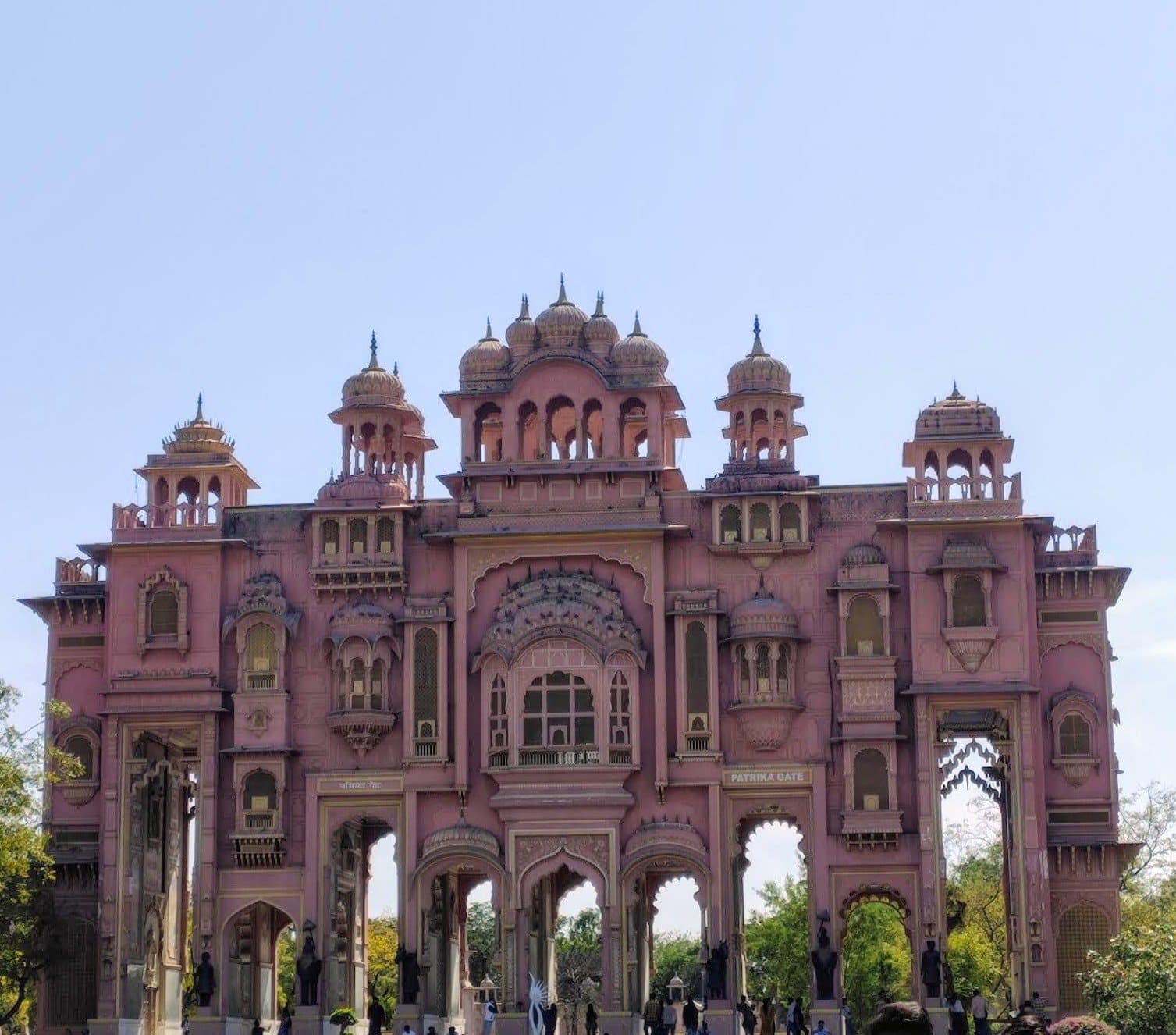
11. Patrika Gate
If you've seen colourful Jaipur photographs on Instagram, there is a good chance you've already encountered Patrika Gate.
Located at Jawahar Circle, the gate has become one of the city's most popular photography locations thanks to its colourful arches, detailed patterns and Rajasthan-inspired artwork.
Each section features intricate decorative work that makes the corridor particularly photogenic.
While it is much newer than Jaipur's historic forts and palaces, Patrika Gate has quickly become a popular stop for visitors.
Best for: Photography, architecture and short visits
Recommended time: 30 to 45 minutes
Apna Jaipur Tip: Visit early in the morning if photography is your priority. Later in the day it can become busy.
12. Panna Meena ka Kund
Located near Amer Fort, Panna Meena ka Kund is a historic stepwell known for its striking geometric staircases.
The symmetrical steps create one of the most distinctive architectural compositions around Amer.
Because the site is relatively compact, you don't need a lot of time here. It works particularly well as part of an Amer-area itinerary.
Best for: Architecture, heritage and photography
Recommended time: 20 to 30 minutes
Nearby: Amer Fort
13. Johari Bazaar
Jaipur's heritage is not limited to monuments. Its old markets are an equally important part of experiencing the city.
Johari Bazaar is one of Jaipur's most famous traditional markets and is particularly associated with jewellery, gemstones and traditional Rajasthani designs.
The surrounding old-city architecture, busy streets, shops and generations-old businesses make walking through the bazaar an experience in itself.
Even if you don't intend to shop, it is worth visiting to experience the commercial character of old Jaipur.
Best for: Jewellery, gemstones, traditional shopping and local culture
Recommended time: 1 to 2 hours
Shopping tip: Compare products and prices across multiple stores before making significant purchases, especially when buying jewellery or gemstones.
14. Bapu Bazaar
Another popular shopping destination is Bapu Bazaar, known for textiles, traditional footwear, clothing, handicrafts and souvenirs.
If you're looking for Jaipur-style products such as mojari footwear, printed textiles or small gifts, this is one of the easiest markets to explore.
The experience is less about visiting a single attraction and more about walking through the market, browsing stores and experiencing Jaipur's street life.
Best for: Souvenirs, textiles, mojari and budget shopping
Recommended time: 1 to 2 hours
15. Explore Jaipur's Walled City
Instead of treating Jaipur's old city merely as the area between individual monuments, spend some time simply exploring it.
The walled city of Jaipur is itself a UNESCO World Heritage Site.
Founded in 1727 by Sawai Jai Singh II, Jaipur was unusually planned on a grid, with major streets, public squares known as chaupars, markets, temples and residential areas forming part of the urban design.
Walking through the old city lets you experience elements that aren't captured by visiting individual monuments: traditional shopfronts, temples, street food, artisans, markets, old havelis and everyday city life.
Start around Hawa Mahal and explore the surrounding bazaars on foot.
Best for: Culture, street photography, architecture, food and shopping
Recommended time: At least 2 hours
Best Places to Visit in Jaipur for Different Travellers
Not everyone visits Jaipur for the same reason. If you have limited time, choose places according to the experience you want.
For First-Time Visitors
Prioritise:
Amer Fort
Hawa Mahal
City Palace
Jantar Mantar
Jal Mahal
Nahargarh Fort
These attractions give you a good introduction to Jaipur's history, architecture and landscape.
For Couples
Consider:
Jal Mahal
Nahargarh Fort
Patrika Gate
City Palace
Cafes and rooftop restaurants around Jaipur
For Families
Good options include:
Amer Fort
City Palace
Jantar Mantar
Albert Hall Museum
Birla Mandir
For Photography
Don't miss:
Hawa Mahal
Patrika Gate
Panna Meena ka Kund
Amer Fort
Nahargarh Fort
Jal Mahal
Jaipur's old city
For History Lovers
Build your itinerary around:
Amer Fort
City Palace
Jantar Mantar
Jaigarh Fort
Albert Hall Museum
Jaipur Walled City
How Many Days Are Enough for Jaipur?
For most first-time visitors, 2 to 3 days gives you enough time to experience Jaipur without rushing through every attraction.
Jaipur in 1 Day
If you only have one day, focus on the essentials:
Amer Fort → Jal Mahal → City Palace → Jantar Mantar → Hawa Mahal → Old City
This will be a busy day, but it covers many of Jaipur's most famous attractions.
Jaipur in 2 Days
Day 1: Amer Fort, Panna Meena ka Kund, Jaigarh Fort, Jal Mahal and Nahargarh Fort.
Day 2: Hawa Mahal, City Palace, Jantar Mantar, Johari Bazaar, Bapu Bazaar and Albert Hall Museum.
Jaipur in 3 Days
With a third day, slow things down and explore places such as Galtaji, Birla Mandir, Patrika Gate, museums, local markets, cafes and neighbourhoods.
You can also dedicate more time to Jaipur's food and shopping rather than moving continuously between monuments.
Best Time to Visit Jaipur
For sightseeing, the cooler months are generally the most comfortable because Jaipur's outdoor attractions involve a considerable amount of walking.
October to March
This is generally the most pleasant period for sightseeing, forts, markets and outdoor exploration.
It is also a popular tourism season, so major attractions can be busy.
April to June
Jaipur can become extremely hot during the summer months. If visiting during this period, schedule outdoor monuments for early morning and keep indoor attractions for the hotter part of the day.
July to September
The monsoon can bring some relief from the summer heat, and the Aravalli surroundings often look greener.
Rain can occasionally affect outdoor plans, so keep some flexibility in your itinerary.
Getting Around Jaipur
Jaipur's attractions are spread across several parts of the city.
Hawa Mahal, City Palace, Jantar Mantar and the major old-city bazaars are relatively close together and can be combined.
Amer Fort, Jaigarh Fort, Jal Mahal and Panna Meena ka Kund form another natural sightseeing cluster.
For local transportation, visitors commonly use:
- Auto-rickshaws
- App-based cabs
- Taxis
- Jaipur Metro for routes it serves
- Local buses
- Private cars with drivers
For a full sightseeing day, hiring a cab for several hours can be more convenient than arranging transportation separately between distant attractions.
Walking works particularly well inside sections of the old city, although traffic and weather should be considered.
Practical Tips for Visiting Jaipur
A little planning makes exploring Jaipur considerably easier.
Start early: Major attractions become busier later in the day, and mornings are generally better for walking and photography.
Group nearby attractions: Don't zigzag across the city. Visit Amer-area attractions together and old-city attractions together.
Wear comfortable footwear: Forts and palaces involve plenty of walking, stairs and uneven surfaces.
Carry water: This is especially important outside the winter months.
Respect religious places: Dress appropriately and follow photography and footwear rules at temples.
Check current timings: Monument timings, entry fees and access rules can change. Check official information before your visit.
Keep time for markets: Jaipur's bazaars aren't just shopping destinations. They are part of the city's cultural experience.
Don't try to see everything: Jaipur is much more enjoyable when you properly experience a few places rather than rushing through a checklist.
Frequently Asked Questions About Places to Visit in Jaipur
What are the top 5 places to visit in Jaipur?
For a first visit, Amer Fort, Hawa Mahal, City Palace, Jantar Mantar and Nahargarh Fort provide an excellent introduction to Jaipur.
Is 2 days enough for Jaipur?
Yes. Two well-planned days are enough to cover many of Jaipur's major attractions. Three days are better if you also want to explore markets, food, museums and less-touristy places.
Which place is most famous in Jaipur?
Hawa Mahal is arguably Jaipur's most recognisable landmark, while Amer Fort is one of its largest and most impressive tourist attractions.
What can I visit near Hawa Mahal?
City Palace, Jantar Mantar, Johari Bazaar, Bapu Bazaar and several parts of Jaipur's historic walled city are nearby.
Which places are best to visit in Jaipur at night?
Nahargarh is popular around sunset and early evening, while illuminated landmarks such as Albert Hall Museum and Birla Mandir can also be attractive after dark. Jaipur's restaurants, markets and cafes provide additional evening options.
Is Jaipur suitable for a family trip?
Yes. Jaipur offers historical monuments, museums, markets, temples, restaurants and cultural experiences suitable for travellers across different age groups.
What is Jaipur famous for?
Jaipur is famous for its forts and palaces, pink-coloured historic architecture, jewellery and gemstones, block-printed textiles, handicrafts, traditional markets, Rajasthani cuisine and royal heritage.
Final Thoughts
Jaipur rewards travellers who look beyond a checklist of monuments.
Yes, you should see Hawa Mahal. You should walk through Amer Fort, understand the enormous instruments at Jantar Mantar and watch Jaipur spread beneath you from the Aravalli hills.
But also walk through Johari Bazaar. Notice the architecture around the old city. Try local food. Spend an evening watching the city change colour. Explore a neighbourhood or market that wasn't on your original itinerary.
That is where Jaipur becomes more than another stop on a Rajasthan trip.
It becomes a city you actually experience.
Whether you're visiting for a day, a weekend or an extended stay, use this guide as your starting point and explore Jaipur at your own pace.